

You are halfway through your guest list when you hit a name and pause: is she Miss, Ms., or Mrs.? The confusion over Miss vs. Ms. vs. Mrs. is one of the most common snags couples run into when learning how to address wedding invitations. Getting it right shows your guests you took care. At VedVed, we have put together this simple guide to what each title means, when to use it, and what to do if you are unsure.
What Is the Difference Between Miss, Ms., and Mrs.?
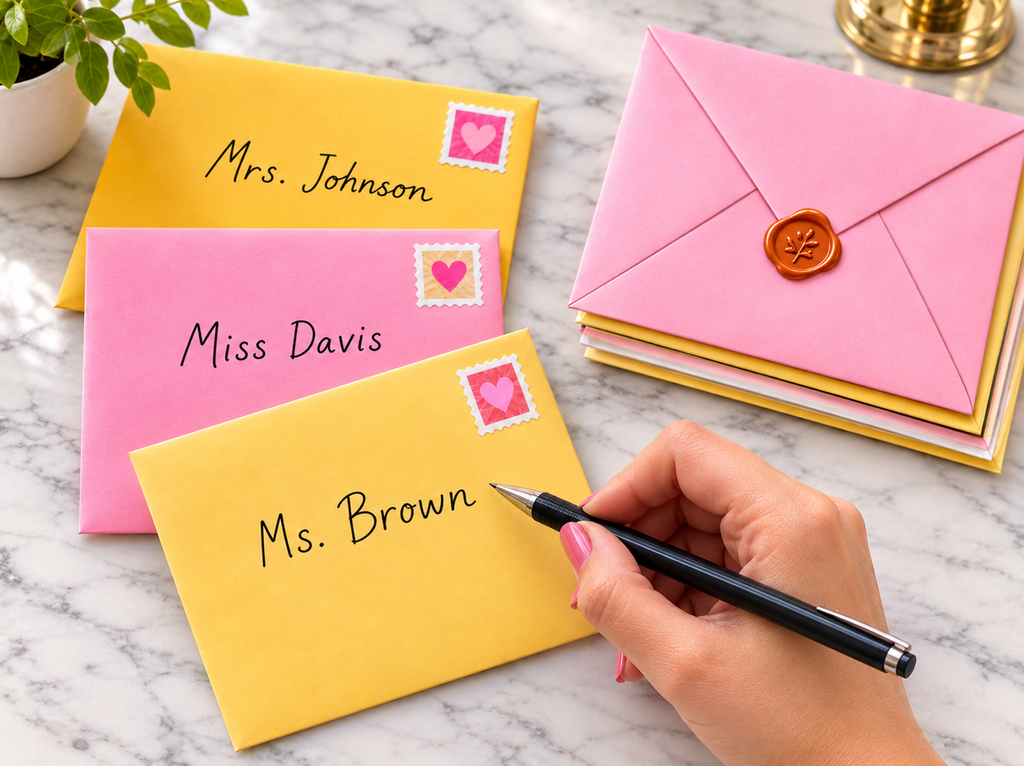
Miss traditionally refers to an unmarried woman, Mrs. traditionally refers to a married woman, and Ms. doesn’t indicate marital status at all, which makes it suitable for any adult woman. That said, tradition is only a starting point. A woman’s own preference always comes first, so use the title she chooses whenever you know it.
| Title | Meaning | Common Usage |
| Miss | Traditionally indicates an unmarried woman | Girls and younger unmarried women |
| Ms. | Does not indicate marital status | Adult women, married or unmarried |
| Mrs. | Traditionally indicates a married woman | Married women who prefer the title |
When to Use Miss, Ms., and Mrs. Correctly
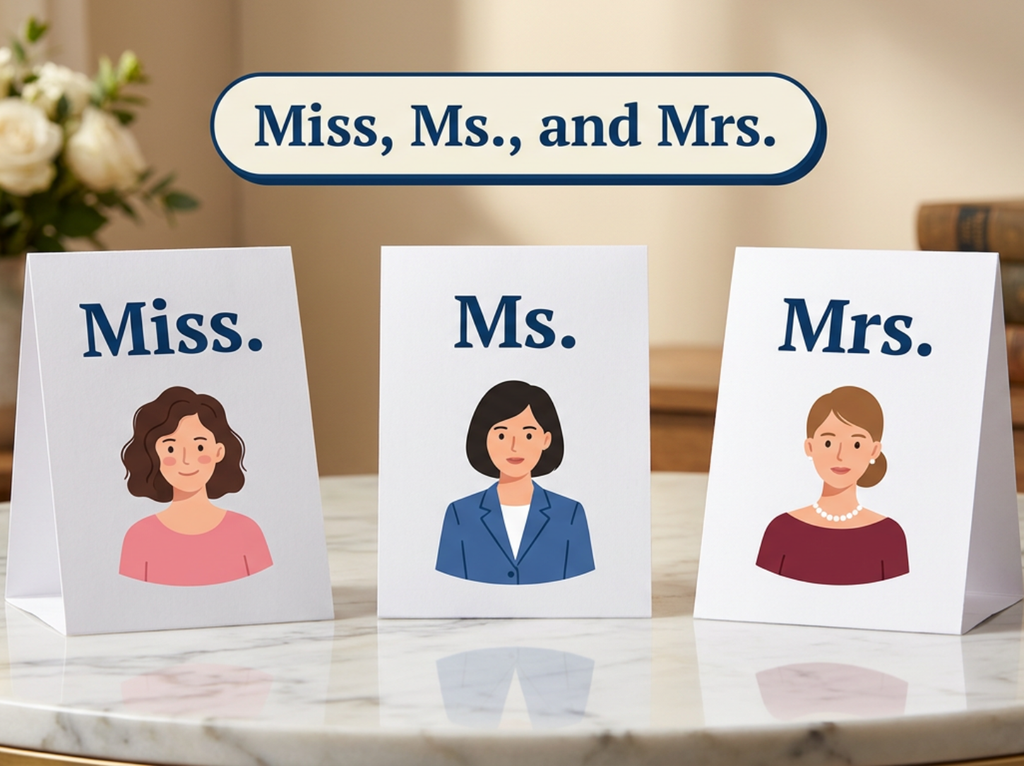
Each title has its history and its own context. Here’s how to tell them apart in everyday use.
When to Use Miss for Unmarried Women
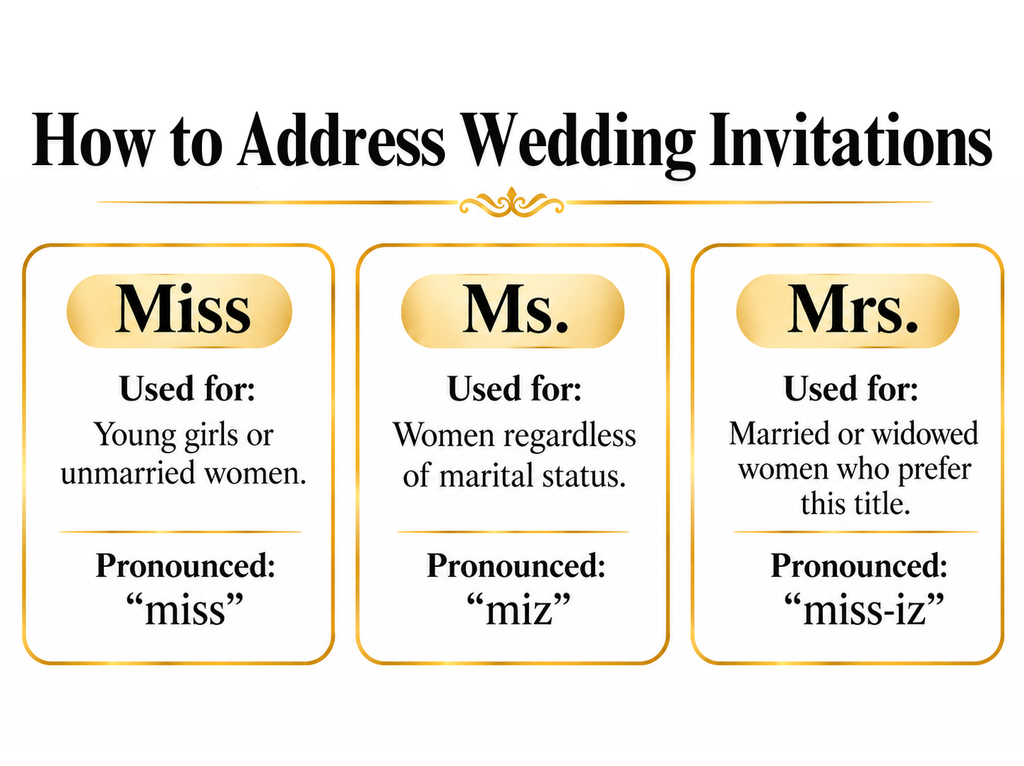
“Miss” is the traditional title for girls and unmarried women. It’s the natural choice for anyone under 18, like a young cousin or a flower girl on your guest list. Among adult women, some still love being called Miss, but many prefer Ms., so it’s best to use Miss only when you know it suits her. On an invitation, that might look like “Miss Emily Carter.”
When to Use Ms. for Married and Unmarried Women
“Ms.” (pronounced “miz”) works for adult women, whether they are married, single, divorced, or widowed. It does for women what “Mr.” does for men: it simply addresses her without mentioning her relationship status. That’s why Ms. is a dependable default whenever you don’t know someone’s preference.
When to Use Mrs. for Married Women
“Mrs.” is the traditional title for a married woman, and many women are happy to use it. Some widows continue to use Mrs. as well, if that’s what they prefer. The key phrase is “if she prefers,” because not every married woman goes by Mrs.
How to Address Wedding Invitations Using Miss, Ms., and Mrs.
An invitation is often the first thing your guests receive from you, so the title on the envelope sets a warm and respectful tone. A little care here goes a long way, and it’s easy to get right once you know the basics.
Addressing Invitations to Unmarried Women
For a young guest or a woman who likes the traditional title, use Miss, as in “Miss Emily Carter.” For an adult woman who isn’t married, Ms. is usually the safer pick, as in “Ms. Olivia Parker.”
Addressing Invitations to Married Women
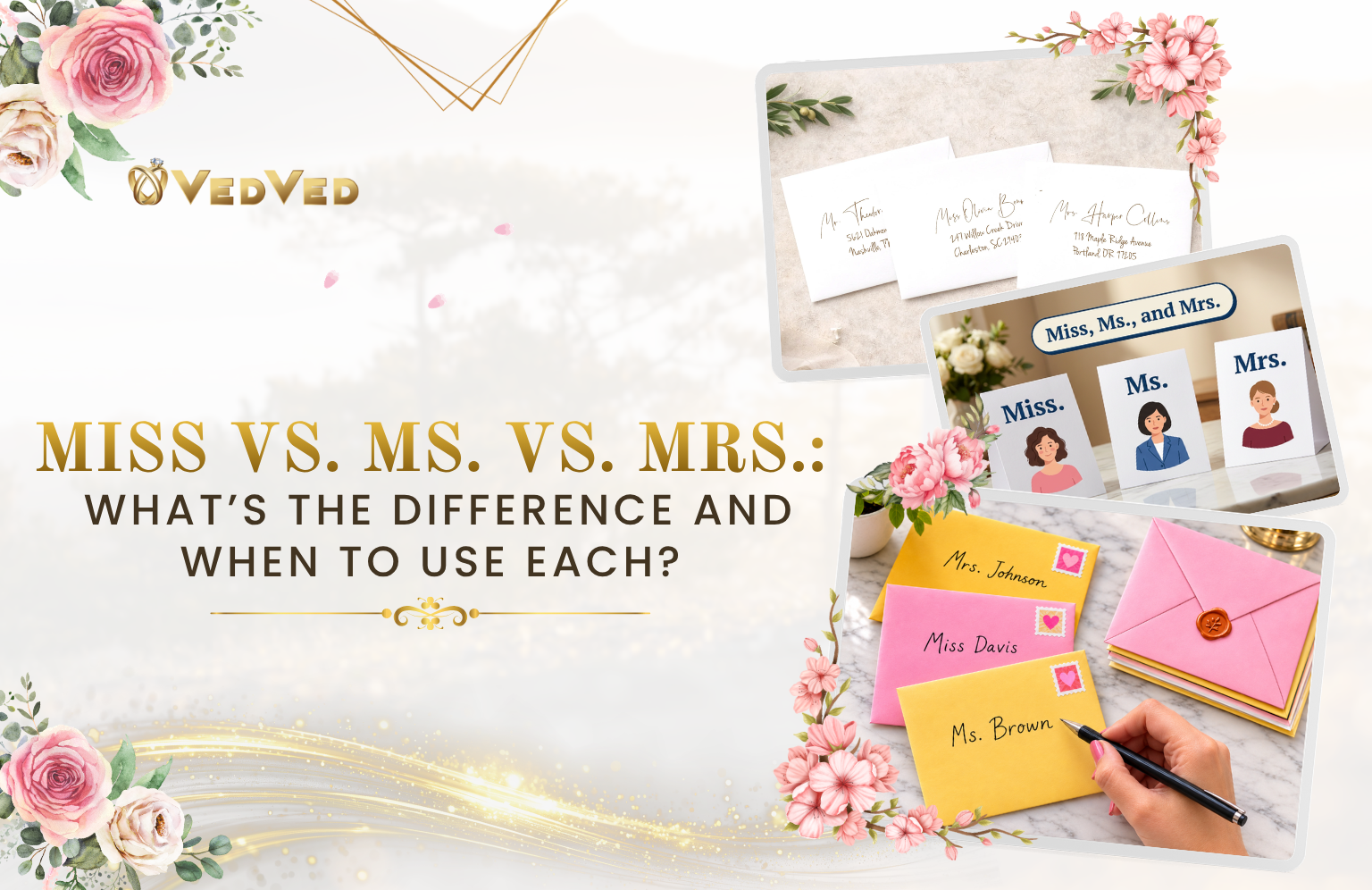
A married guest might be “Mrs. Sarah Williams” or “Ms. Rachel Brown,” and both are correct. It depends entirely on the individual’s preference, not on her marital status alone. If you know which title she uses, write that.
Addressing Invitations When You Don’t Know a Guest’s Preferred Title
The best approach is to ask. If you are collecting addresses through a guest list form or a wedding website, add a small field for each guest’s preferred title. If you can’t check, Ms. is a respectful choice for an adult woman, as it doesn’t make any assumptions about her life.
Should You Use Ms. or Mrs. After Marriage?
Marriage doesn’t require a woman to switch to Mrs. She can choose Mrs. or Ms., and either one is perfectly fine.
If You Take Your Spouse’s Last Name
Many women who change their surname after the wedding go by Mrs., since it’s the traditional pairing and reflects the shared name. Ms. is still an option, though, if you’d rather keep your title neutral.
If You Keep Your Maiden Name
Ms. is a natural fit here, and many women in this situation use it. Some choose Mrs. because they like the title. It’s your decision either way.
If You Prefer Ms. After Marriage
Plenty of women use Ms. after marriage regardless of what they do with their surname. It’s common in professional and formal settings, where people prefer that their marital status stay out of the spotlight.
What Other Titles Can You Use on Wedding Invitations?
Besides Miss, Ms., and Mrs., a few other titles come up often when you are addressing envelopes.
Mx. for Gender-Neutral Addressing
“Mx.” (often pronounced “mix”) is a gender-neutral title for people who prefer not to be addressed as Mr., Ms., or Mrs. If a guest uses it, write it just as you would any other title, for example, “Mx. Jordan Lee.”
Dr. and Other Professional Titles
Anyone with a doctorate, whether medical or academic, can be addressed as “Dr.” on a formal invitation. Other guests, such as clergy members, judges, or military personnel, may have their own preferred titles, so check how they’d like to be addressed.
Choosing the Right Titles for Your Wedding Guests
Miss, Ms., and Mrs. each have a traditional meaning, but the most reliable guide is always the guest’s own preference. When you know it, use it. When you don’t, Ms. is a respectful default. Taking a few extra minutes to address each invitation thoughtfully is a small part of wedding planning that guests genuinely notice. We hope this guide from VedVed helps you send invitations with confidence and a little less second-guessing.
You may also like this blog – “Beautiful Bible Verses About Marriage, Love, and Commitment“
Frequently Asked Questions About Miss, Ms., and Mrs.
Q1. Is Ms. Used for Married or Unmarried Women?
A1. Ms. works for adult women regardless of marital status, whether they are married, single, divorced, or widowed.
Q2. Should You Use Ms. or Mrs. on Wedding Invitations?
A2. Use whichever title the guest prefers, and choose Ms. if you aren’t sure.
Q3. Can a Married Woman Use Ms. Instead of Mrs.?
A3. Yes, a woman can keep using Ms. after marriage, whether or not she changes her surname.