


The wedding day is fixed, the ring is on… Now the question arises: how do we get there?
That is usually when the excitement meets a very long list of decisions. A practical wedding planner and checklist turns those decisions into smaller, calmer steps. VedVed helps you with the right timeline. Planning can feel less like a second job and more like part of the celebration.
The Master Wedding Arrangements Checklist
A year gives you room to plan without rushing, but every engagement moves differently. If your timeline is shorter, combine the early stages and focus first on the choices that affect everything else. Use this wedding planning guide as a flexible roadmap, and adjust each stage to suit your engagement length.

1. Work Out the Budget and Guest List
12 Months Before
Before you tour a venue or fall in love with a photographer, talk about money. Decide what you can comfortably spend and whether family members plan to contribute.
Then start the guest list. It does not need to be final yet, but you need a realistic number before looking at venues.
- Write down the people you cannot imagine missing the day.
- Keep a second list for coworkers, distant relatives, and possible plus-ones.
- Choose two or three wedding priorities.
- Leave part of the budget untouched for unexpected costs.
You can create a spreadsheet for a complete wedding checklist to track everything in the list.
2. Choose the Venue and Set the Date
10 to 12 Months Before
You know who you are marrying. Now you need to decide where everyone will gather.
The venue shapes the guest count, atmosphere, catering plan, and often the budget. Tour the full property rather than judging it from styled photographs.
Look at the practical side too. Is there enough parking? Are the restrooms easy to reach? Does the indoor backup feel like a real ceremony space or an emergency compromise?
Before paying a deposit, confirm:
- The seated guest capacity.
- Access and event hours.
- Catering and alcohol rules.
- Furniture, staffing, setup, and cleanup.
- Weather backup plans.
- Cancellation and rescheduling terms.
Every promise should appear in the contract.
3. Book the People Who Shape the Day
8 to 10 Months Before
Once the venue and date are secure, start contacting the vendors who tend to book early.
A planner may be the first call. Some couples want help from the first budget meeting. Others only need someone to step in near the wedding and manage the timeline.
Couples planning by the coast may speak with wedding planners in Corpus Christi, Texas, who know the local venues and changing beach conditions.
Your next calls may include:
- The photographer and videographer.
- The caterer and bar team.
- The DJ, band, or ceremony musician.
- The florist.
- Rental and transportation companies.
Ask what each quote truly covers. Delivery, travel, overtime, assistants, and cleanup may appear as separate charges. Record every detail in your wedding arrangements checklist before signing.
4. Order Attire and Help Guests Plan
6 to 8 Months Before
This is often the stage when the wedding begins to feel real. Outfits are ordered, hotel plans take shape, and guests start asking questions.
Wedding dresses, suits, and custom pieces may take months to arrive. Alterations need time as well, so begin earlier than you think you need to.
Book hotel rooms near the venue for traveling guests. Then build a simple wedding website with the schedule, hotel link, transportation notes, registry, and parking details.
Couples hosting a large city celebration may also compare wedding planners in Dallas, Texas, for help with hotel blocks, guest travel, and several vendor teams.
5. Send Invitations and Finalize the Food
3 to 4 Months Before
The guest list has lived in a spreadsheet for months. Now the replies begin to make it real.
Send invitations with a clear response date. Give yourself time to follow up before the venue and caterer need the final count.
At the tasting, choose food you would genuinely enjoy eating. Ask how the caterer handles allergies, vegetarian meals, children’s plates, and late changes.
This is also the time to:
- Order the cake or dessert.
- Confirm the bar menu.
- Review table and chair quantities.
- Check linens, glassware, and serving items.
- Confirm delivery and pickup times.
Before ordering rentals, ask what the venue and caterer already provide. Paying twice for the same chairs is an easy mistake.
6. Bring the Final Details Together
1 to 2 Months Before
The final weeks are not for adding more ideas. They are for making the plans you already chose work smoothly.
Contact each major vendor and confirm the date, arrival time, location, balance, and main contact person. Build one wedding-day schedule that covers preparation, photographs, the ceremony, dinner, speeches, dancing, and the final exit.
You should also:
- Check current marriage-license requirements.
- Send the final guest count.
- Finish the seating plan.
- Prepare vendor payments and tips.
- Confirm transportation.
- Review the weather backup.
- Share the final timeline.
Open your wedding planner and checklist during the final week and make sure every task belongs to someone. You should not be answering delivery calls while getting ready.
Picking the Right Level of Help
Every couple needs a different amount of support. Use this simple table to see what kind of help fits your schedule and budget.
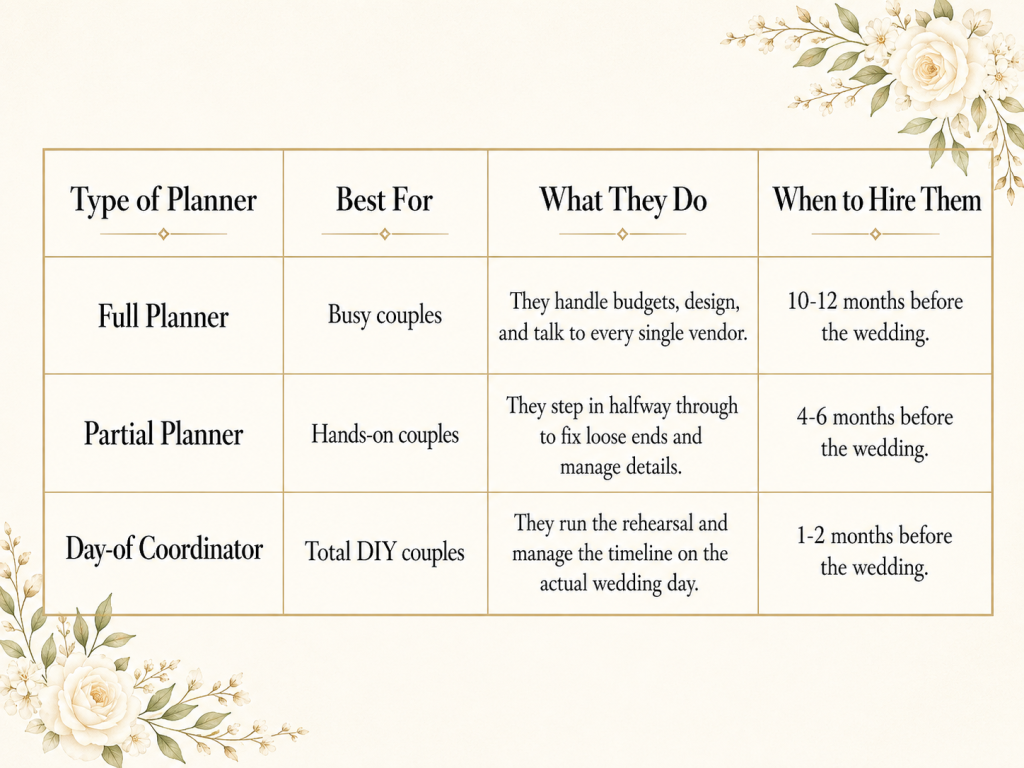
Couples planning a Hill Country celebration may also compare wedding planners in Austin, Texas, for help with local venues, guest travel, and vendor coordination.
One of the most useful wedding planning tips is to ask about added fees before signing, not after the deposit is paid.
Keep the Joy in the Plan
A thoughtful wedding planner and checklist gives each decision its own time. Handle the choices that affect everything else before worrying about smaller details. Stay flexible, ask direct questions, and enjoy the season you are in. VedVed helps couples stay organized without letting the checklist take over the celebration.
Frequently Asked Questions on The Ultimate Wedding Planning Checklist, Plus a Timeline to Keep You on Track:
Q1. What should a complete wedding checklist cover?
A1. Start with the budget and guest list, then work through bookings, contracts, payments, and legal paperwork.
Q2. Which vendors should be booked first?
A2. Start with the venue and planner. Then book photography, catering, and entertainment.
Q3. Do wedding planner prices vary by location?
A3. Yes. Rates often change by city, experience, and service level. Larger markets may cost more, while smaller towns may offer simpler packages.